VIGO PHOTONICS · SMART TAIWAN
Industrial infrared sensing: temperature and multi-point monitoring
Need to monitor a moving target, several optical points, process gases or laser signals? Start with the measurement task, then define wavelength, field of view, timing and the readout chain. SMART coordinates component and module selection for your integration requirements.
Start with the industrial measurement task
| Task | Define first | Candidate route | Integration boundary |
|---|---|---|---|
| Non-contact temperature / moving targets | Target temperature range, emissivity, spot size, distance, background and observation time. | Review the spectral response and timing of AMS3140-01 or AMIS8140-01 for your optical design. | Temperature accuracy must be established with the optics, reference and calibration; it is not specified by detector D*. |
| Multi-point optical monitoring | Number and arrangement of channels, simultaneous acquisition, signal level and DC / AC requirements. | Compare 32EM-5-01 linear geometry with 32MM-5 two-dimensional geometry and their different DC / AC bands. | Both need matching multi-channel analogue readout and heat dissipation; neither is a complete thermal camera. |
| Process-gas / emission analysis | Gas absorption line, source, optical path, interference and calibration. | Begin with the gas analysis and spectroscopy selection routes before specifying a module. | Confirm the complete sampling and measurement chain; a sensing component is not a certified gas alarm. |
| Laser power / optical signal monitoring | Actual wavelength, incident power and power density, spot size, linearity and coupling. | Check PVIA-4TE-10 response and operating limits with the manufacturer. | Confirm optical attenuation / coupling and front-end limits before selecting a configuration. |
Manufacturer applications provide technical background. The candidate routes here are conditional starting points, not SMART customer installations or measured results.
Define the measurement requirements
| Measurement task | Temperature, optical signal or process gas |
|---|---|
| Measurement geometry | Distance, target size, field of view and obstructions |
| Timing / channels | DC / AC content, update rate, synchronisation and channels |
| Environment | Background radiation, temperature, vibration, dust and condensation |
| Integration / acceptance | Optics, thermal design, readout and field calibration |
Define the readout and acceptance conditions
- Measurement target / process
- Optical collection and filtering
- Detector and front end
- Analogue acquisition
- Reference and application calibration
- Define what will be accepted: optical signal, relative trend or calibrated temperature. Establish the reference target and comparison method before choosing a sensitivity figure.
- Match signal bandwidth, DC / AC coupling and output load to the receiver; allow for motion and channel synchronisation rather than specifying only the ADC sampling rate.
- 32EM-5-01 needs an external TEC controller; 32MM-5 integrates its controller. Both still need external heat dissipation and matching analogue acquisition.
- Review ambient temperature, dust, condensation, vibration, optical windows, power and enclosure needs. Detector electronics alone do not provide a complete protected monitoring instrument.
Products to evaluate
These are starting points for discussion; suitability depends on the requirements above.
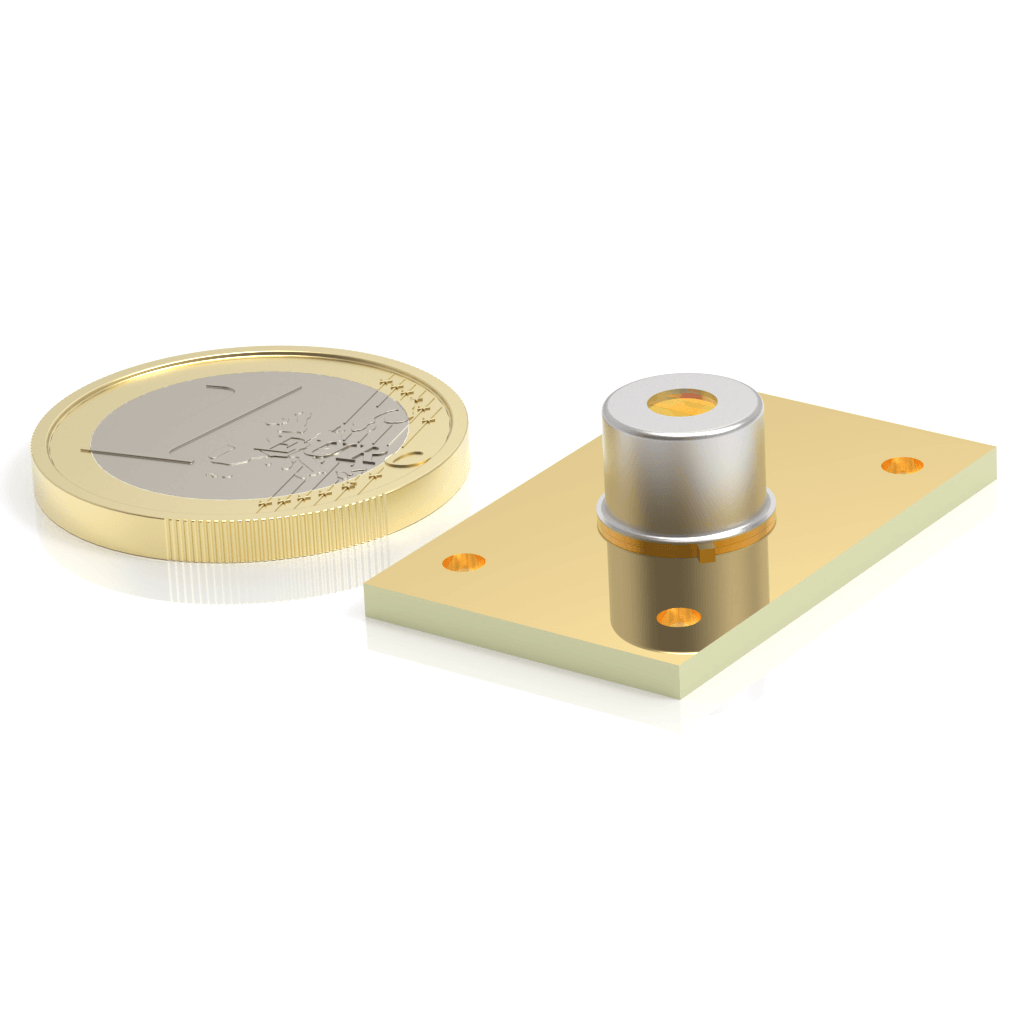
AMS3140-01 infrared detection module
2.0–5.5 μm at Tchip −20°C, with 1TE temperature control, differential amplification, 3.3 V supply and a board-to-board interface.
AMS6140-01 infrared detection module
2.2–6.8 μm at Tchip −20°C, with 1TE control, differential amplification and a 3.3 V supply for longer mid-infrared wavelengths.
AMIS8140-01 optically immersed IR detection module
1.9–11.0 μm at Tchip −20°C. Optical immersion, 1TE control and differential amplification for evaluating signals extending into long-wave infrared.
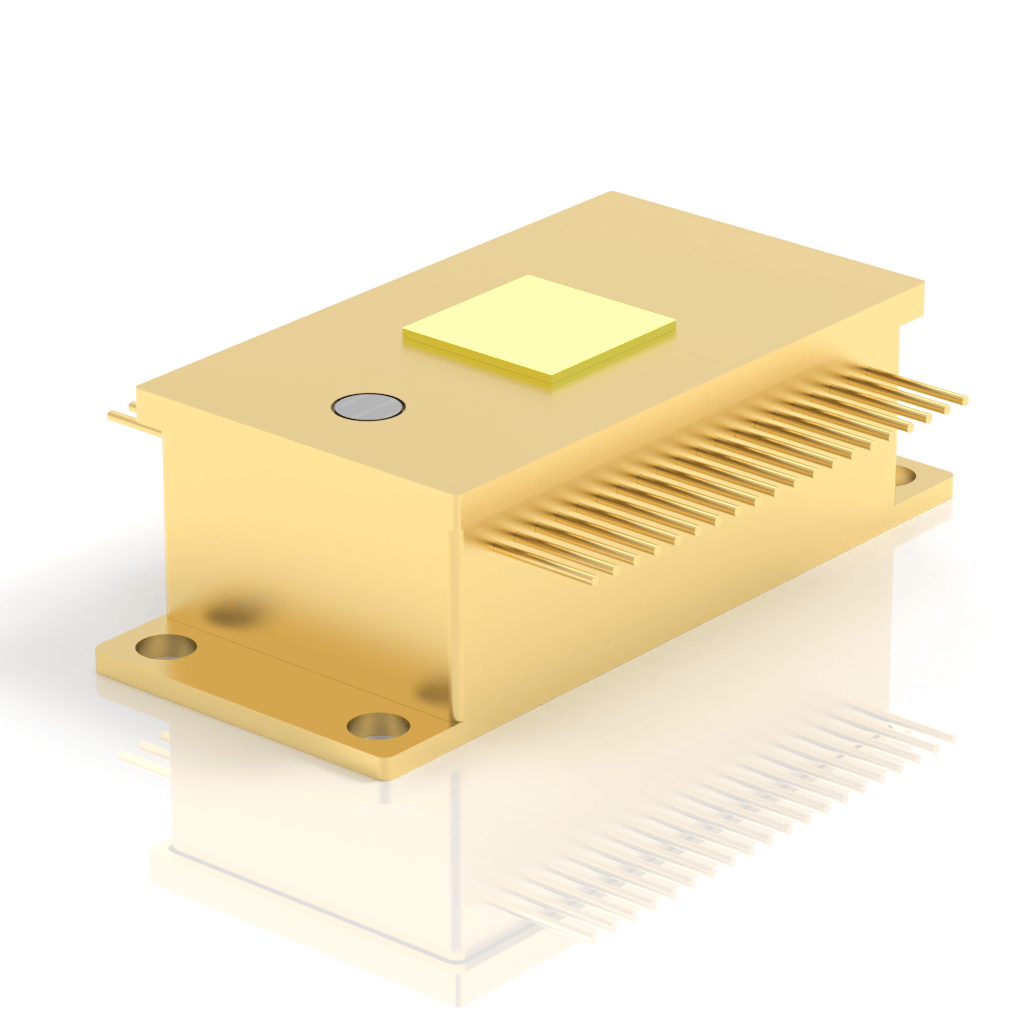
32EM-5-01 32-channel HgCdTe MWIR module
Multi-point temperature monitoring, spectroscopy and multi-channel gas-measurement development with suitable optics, readout and calibration.
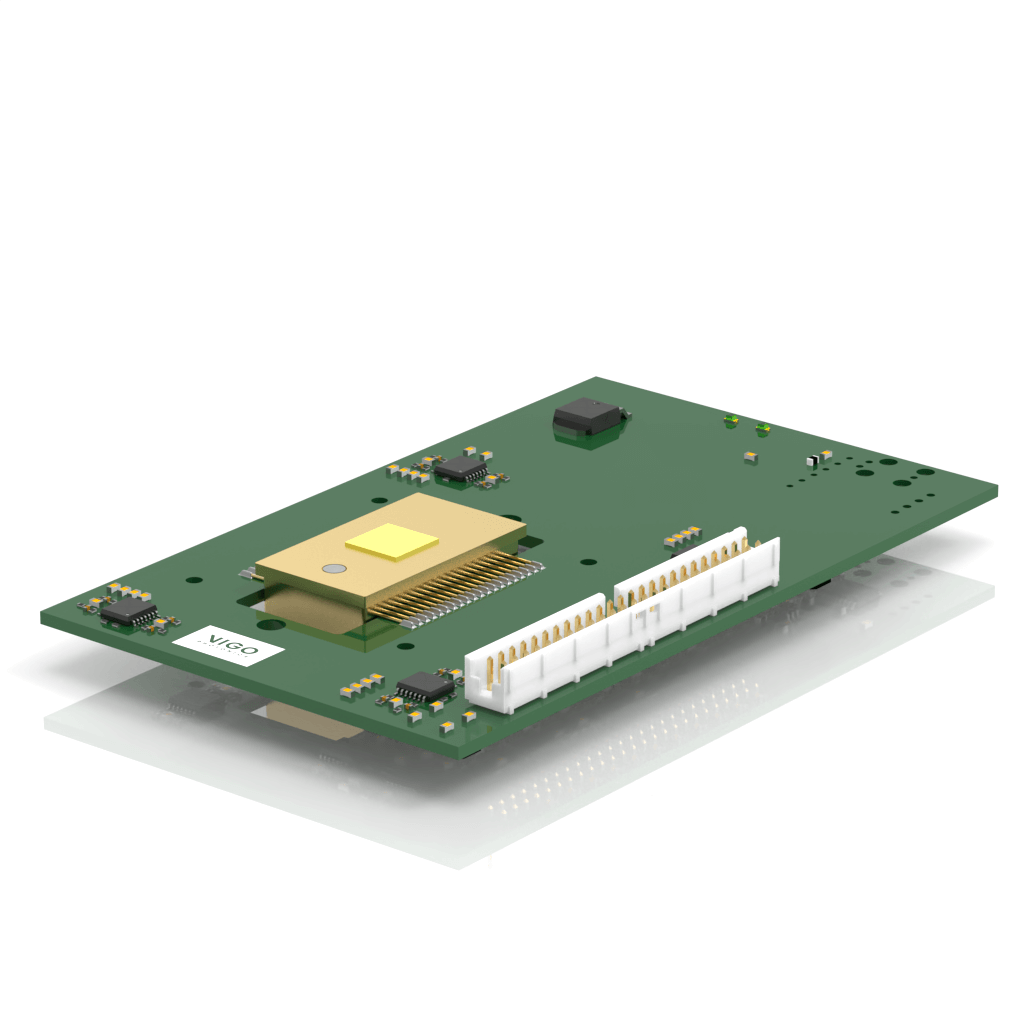
32MM-5 32-channel InAsSb MWIR module
Multi-point MWIR sensing, spectroscopy and gas-analysis development, selected by element geometry, bandwidth and readout requirements.
Use the detector and module selection guide for wavelength, cooling, bandwidth and readout specifications. For source and absorption-line selection, see gas analysis and infrared spectroscopy.
Manufacturer references and product documents
Reviewed 18 November 2026. Application background does not transfer another instrument’s performance to these components. Use the linked product pages for the manufacturer datasheet and operating conditions.
Start with your measurement requirements
Share the model or application, wavelength, signal bandwidth, quantity and desired schedule. Unknown items can be discussed during selection.
Submit a VIGO inquiry